Penfolds Koonunga Hill – An historical perspective

Posted by Martin Field on 17 May 2012 in Wine

This article is by occasional contributor Geoff Parker – Geoff looks at the history of a well-known Australian wine and seeks the origin of the name on the label.

A value for money, commemorative release

Some years ago, the local bottle shop in Blackburn had on sale a magnum of Koonunga Hill Shiraz Cabernet 2004, for the good price of $21. It was called Koonunga Hill (Special Reserve) Claret. The entire bottle was covered in red, and the distinctive appearance commemorated the passing of thirty years of the line. The first release was the 1976 vintage which was released in 1978. I bought the magnum and reflected, “Where have the thirty years gone?”

There was a bottle of the ‘76 in my cellar at this time, but somehow it got included in a parcel for auction at Langton’s and ultimately realized $25. I should have kept it. With the magnum in my hand and thinking back to the label of the ‘76, it struck me that I’d purchased every vintage in between, and for good reason.

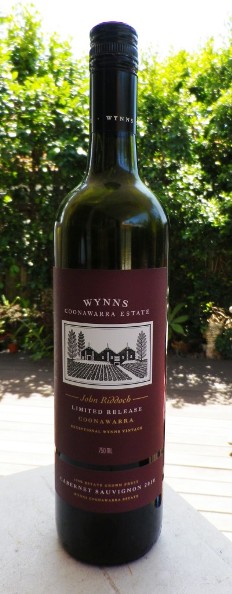
Penfolds Koonunga Cabernet 2010

Koonunga Hill was always a reliable, very affordable, quality red that you could freely splash about after a game of golf, or when neighbours dropped in, or when a pizza at the local Italian was a good idea. But treating it in this way was probably a little too casual, particularly during the early years, for as Len Evans said of the first release in the Wine and Spirit Buying Guide of June 1978:

“Koonunga Hill is “…very big on the palate (with) an underlying complexity which I find most appealing…reminiscent of the big Penfolds reds of the 1960s.”

He also said in this publication that the first Koonunga Hill was crafted from fruit from the Koonunga Hill vineyard in the Barossa Valley, and from fruit sourced from Coonawarra and Magill. Read the rest of this entry

Top shelf drinking

Posted by Martin Field on 10 May 2012 in Wine Tasting

Campbells Classic Rutherglen Muscat – 500ml $44 – 92/100. Shows clear golden syrup hues – a quick swirl in the glass leaves lovely ‘legs’. Bouquet of aged alcohol, raisins and ‘roll your own’ tobacco. Goluptious palate of dark fruitcake, leather, and aged wood. A superb after dinner treat.

d’Arenberg Dadd Sparkling – $28 – 87/100. Adelaide Hills, South Australia. Chardonnay, pinot noir, and pinot meunier blend. Pale lemon colour, small slow bead. Light bouquet of warm bread rolls and lemon peel. Dry in the mouth, medium bodied with toasty aspects, dried pears and a crisp citric finish.

Juniper Crossing Semillon/Sauvignon Blanc 2011 – $20 – 86/100. Margaret River, Western Australia. Nose of lemon grass and tomato leaf. Fresh vigorous palate, with a lychee character that reminds me more of sauvignon than semillon fruit.

The Lane Gathering Sauvignon Blanc/Semillon 2009 – $35 – 89/100. Adelaide Hills, South Australia. Herbal nose of lime and a hint of green apple. Smooth, mouth-filling palate with some more of the Granny Smith apple, supported by firm, lemon acidity.

Penfolds Bin 51 Riesling 2011 – $33 – 91/100. Eden Valley, South Australia. Mineral nose with delicate citrus blossoms. Classic varietal palate somehow reminds me of Rose’s Lime Marmalade – without the sugar. This white has a long aftertaste with beautifully balanced, lip-smacking acidity.

Shaw + Smith Adelaide Hills Pinot Noir 2010 – $48 – 90/100. Pale crimson. Heady rose water and strawberry conserve nose. The light colour belies a solid palate stacked with red berry flavours, subdued oak and subtle tannins. Illusions of sweetness from the fruit taper off into a satisfying firm and dry finish.

Angove McClaren Vale Shiraz 2010 – $18 – 87/100. Deep red hues. Warm (14.5% alcohol) and ripe blackberries on the nose. Generous palate of plums, summer berries and mild vanilla oak. Main course style for sure.

Blackjack Major’s Line Shiraz 2009 – $25 – 90/100. Bendigo, Victoria. Peppery fruity nose with a hint of anise. Pleasing intensity of flavours on the palate with sub-strata of liquorice and a hint of dark chocolate.

Zema Estate Cluny Cabernet Merlot 2008 – $26 – 89/100. Coonawarra, South Australia. Dark ruby colour. Lifted nose of mulberries and blueberries. Chewy, dry palate shows more concentrated blueberry character, along with an olive savouriness, the whole ably supported by balanced oak.

Sierra Nevada Stout 355ml stubbie – 6-pack $24 plus – 90/100. California, USA. Delicious roast coffee hints on the nose. Silky smooth and thick in the mouth, showing earthy mocha character and mild bitterness towards the finish. Though a little sweeter, this is right up there with my favourite, Coopers Stout.

Ratings

95+ – Trophy

90+ – Outstanding

85+ – Fine drinking

80+ – Good stuff

75+ – Commercial drop

Prices in Australian dollars.

Vietnam travels – Hanoi

Posted by Martin Field on 10 May 2012 in Wine Travel

Old Quarter – Hanoi

A short flight with Vietnam Airlines takes us from Hue to Hanoi – the capital of Vietnam.

Compared to hot and steamy Ho Chi Minh City, Hanoi in mid-February is cold, overcast and drizzly – one morning it gets down to 11 degrees C and we’re still cold, even wearing four layers of clothing. Other Australians in the Hanoi cold are identifiable by their outfits of shorts, T-shirts and thongs.

Our hotel is in the Old Quarter and the surrounding area is more crowded and has more dangerous traffic than Ho Chi Minh City – which is saying something. It is impossible to walk directly along any footpath or roadside due to myriad motorcycles and motor scooters.

Sweatshop counterfeits?

Wall-to-wall tiny shops line the footpaths, selling clothes, footwear, camping gear, electronics – you name it. There is no noticeable copyright law in Vietnam so many of them stock well-known brand name products, cheap. A local tells us the goods are often sourced from the same sweatshops that the big brand names use.

And there is even a relic of French colonialism as on the street corners old ladies sell baguettes by the dozen.

Fresh baguettes

In the shopping areas, it is surprising to see that Australia’s ANZ Bank supplies most of the ATMs. Read the rest of this entry

Villa Más, s’Agaró, Costa Brava

Posted by Mike Tommasi on 1 April 2012 in Restaurant Reviews
Villa Más, S'Agaró

Villa Más, S'Agaró

This second visit to Villa Más was prompted by my father’s 80th birthday, and since he lives a few miles away from S’Agaró, I invited my parents for lunch there. The site is quite nice, especially at this time of the year, when the weather is good but the tourists are far away. The beach is a few steps away, so the Villa Más terrace is an ideal place for Sunday lunch for five.

My blogging is fairly sparse these days, so I hesitate to refer to my friend Joan Gómez Pallarès and Vincent Pousson as “fellow wine bloggers”; anyhow, both live in Barcelona and strongly recommended going back to Villa Màs.

I remembered from the previous visit how spectacular the wine list was, particularly on French wines , and especially Burgundy. What I did not remember is how good the prices are. Grange des Pères and Peyre Rose are both 70 Euro, which is amazing, considering that in France you would pay close to double that amount. Catalan restaurants have this nice habit of not charging 4-5 times the purchase price, which is standard in France.

The food at Villa Más is quite remarkable too. The chef really knows what he’s doing. My pig’s trotters (peus de porc) with sea cucumbers (esparenyes) were beautifully served – 4 circles of finely chopped meat topped with a thin disc of crackling and an espardenya. Beautiful visuals led to a wonderful array of textures, from the rich soft slowly cooked meat with its gelatinous consistency to the cracking crackling and the delicate fibrous sea cucumber, a great match, perfectly executed. Same goes for the rest of the family’s choices, like monkfish with iberic bacon, or “macaroni” with Idiazábal cheese.

Read the rest of this entry

Green tea ice cream and fizz

Posted by Martin Field on 23 March 2012 in Restaurant Reviews

Jardin Japonesque

Where to go for a light birthday lunch? We hadn’t been to Jardin Japonesque for quite a while so I grabbed a bottle of Pol Gessner from the fridge and we headed off.

On their lunch menu the description of Vegetable Domburi looked good, and so it turned out. Each generous serve included cubes of tempura tofu, silverbeet tsukudani, and  avocado – on a bed of sushi rice – accompanied by a bowl of light miso soup. Great value at $14.00.

For dessert we shared a dish of Uji Kintoki Parfait  - $9.00.

I’ll quote the menu description: “Green tea ice cream, green tea sauce, green tea sable, azuki paste, condensed milk, green tea powder, whipped cream.”

Uji Kintoki Parfait

The velvety, green tea ice cream was, to use a rare phrase, absolutely goluptious.

Glasses of mellow Pol Gessner (an inexpensive champagne from the house of Lanson) matched the food admirably.

Jardin Japonesque, BYO only. 3 Arcadia St, Noosa Junction, Qld. (07) 54480724.


USA Holiday Food Report – another view

Posted by Martin Field on 18 March 2012 in Food and Wine

Joe Fogarty, writing from Chicago. takes exception to Peter Howard’s USA Holiday Report.

I’m sorry – but only a little – to read of Chef Peter Howard‘s disappointment with the food in the U.S. Bad flavour combinations in Italian dishes? Dumping on Rachael Ray? Either he’s not telling us about the very wonderful meals he had during FIVE weeks of travel here, or he wasn’t trying very hard to find them.

No doubt, I could spend five weeks in Australia and find disappointment with the food. Are there no popular food show personalities on TV in Australia offering their twist on the vegemite sandwich?

And you know, a peanut butter, bacon and tomato sandwich sounds like something that might be pretty good, at least to an American palate. You know, the palate non-American foodies like to dismiss as unrefined?

And speaking of critics and criticism, I thought you’d find interesting the food blogosphere kerfuffle that happened here last week, since it involves Italian food of the kind that Howard’s description might fit.

Eighty-five year old Marilyn Hagerty writes the “Eat Beat” column for the Grand Forks Herald. Grand Forks is in North Dakota, a windswept town of about 70,000 souls on the prairie of the Upper Midwest. No one would consider it a culinary Mecca.

Recently, an Olive Garden restaurant opened there and Ms. Hagerty offered her impressions in this review: Long-awaited Olive Garden receives warm welcome.

(Background: The Olive Garden is a chain restaurant ubiquitous in the U.S.. For some Americans, especially in small and medium sized cities – and in lots of suburbs – it is the only Italian restaurant choice.)

Hagerty’s very earnest review of the restaurant went viral and lots of snarkologists were quick to make fun of it.

But then some people put Hagerty’s review in context. A fabulous sportswriter, Joe Posnanski, had this beautifully-written take on her review - The Olive Garden - and the discussion it engendered.

Hagerty made the national news. She did TV interviews. She is as delightful and forthright and sweet as you would expect an 85 year old five columns-a-week writer to be. And she’s no rube, either.

The funny thing is, it’s simply a report about the restaurant itself and the experience of eating there – except for the food.

A former editor of hers related that when Hagerty writes about the paint on the wall and the flower arrangements, you know the food isn’t very good.

It’s a subtle approach. Maybe food critics could take a lesson!

I invite Chef Howard to Chicago for a culinary exploration filled with interesting flavours, small portions, no Rachael Ray – and a trip to the Olive Garden, just for fun.

IFAQS – Infrequently asked questions

Posted by Martin Field on 16 March 2012 in Wine

Astrid of Alphington writes, “Dear Martin, My dear old dad in his day had a great fondness for excellent shiraz and blends from the Coonawarra and pinots from the Yarra Valley. He has a huge collection of what was once beautiful wine from some top notch winemakers, including some limited edition magnums.

“The problem is, it has been badly stored in a hot, uninsulated sunroom for 10-20 years, and the time is coming when we are going to have to clear out his house.

“I am pessimistic about the state of the wine and am thinking we will have to give it a decent Christian burial in a skip. What do you think? Is it likely to be drinkable?”

Astrid, I have never thrown out an unopened bottle of wine in my life and nearly had a heart attack at the thought of your dad’s collection ending up in a skip.

Sure, some of the wine may be in poor condition but my bet is that most of it will be eminently drinkable and that a few of the bottles will be absolute gems.

So my advice is, first move the wine to a friendlier environment. Second, sample a bottle whenever the mood takes you and see what each wine has to say to you.

If you really want to bury or dump the wine let me know and I’ll fly down to Melbourne and “dump” it where it will do most good. My atheistic throat comes to mind.

Noshtalgia

Posted by Martin Field on 16 March 2012 in Food and Wine

Bubbles with ‘Pies

Mid-1970s, Geoff Parker and I were in the outer at Victoria Park, watching Collingwood (The ‘Pies) play an inferior team. (That is, most of them.) Footballing legend, Fabulous Phil Carman was, as usual, starring.

In those days, you could bring booze to the games and we did, lots.

This particular Saturday arvo, instead of 6-packs of Coopers Sparkling Ale and sick of the usual footy fare of cold meat pies, we took along an Esky full of goodies.

My memory is that among other delicacies we ate sandwiches of smoked salmon on wholemeal bread whilst sipping Lindemans Imperator Brut 1965, from flutes.

The hardened, beer-swilling denizens of the terraces looked on with amazement, but no blood was shed.

Vietnam – Ho Chi Minh City to Hanoi – Part I

Posted by Martin Field on 16 March 2012 in Wine Travel

Early February 2012, we arrive in Ho Chi Minh City, a place we visited briefly in 2008.

Only 36 years have passed since the end of the Vietnam War, and, while we are not there as war tourists, we can’t ignore the evidence of that recent past.

For example, in the War Remnants Museum in Ho Chi Minh City; in the nearby Cu Chi tunnels; in shops selling reproduction propaganda posters; in reafforestation projects still revegetating land recovering from Agent Orange defoliation.

Against that sombre background, we set out on a 10 day tour from hot and steamy Ho Chi Minh City (AKA Saigon), heading north to Hanoi.

8/2/12 – 9/2/12. Saigon is a mad house of traffic as usual.

At the Cu Chi Tunnels, some 40 km from Saigon, our Intrepid Travel guide, Son Le, (“Call me Sunny.”) tells us that a few of the passageways were widened – so that fat tourists can see where the Viet Cong lived and fought during the war.

Cu Chi tunnel entrance

I venture underground. The tunnel is narrow and as black as night. I have to stoop doubled over to proceed. Not normally claustrophobic, after about 10 metres I’m glad to get out. Read the rest of this entry

Wine in Vietnam

Posted by Martin Field on 16 March 2012 in Wine Travel

On a visit to Vietnam in February 2012, a superficial look at wine lists shows wines from Australia, Argentina, South Africa, Chile, France, Italy and the US fairly well represented. Of the Australian labels, De Bortoli and Jacobs Creek are ubiquitous.

Prices I thought were uppish, which for a relatively poor country means that sales would mainly be to ex-pats and tourists.

I wonder about cellaring and the consequent condition of wine in a country of extreme temperature and tropical monsoons.

One young Argentinean cabernet we try is oxidised. A cheap Vietnamese white – Dalat – made from the cardinal grape is average to quaffable. I didn’t try the Dalat red, made from the same grape, with strawberries added.


Links to our Favourite Blogs and their Latest Posts

Wine Blogs


Food Blogs